Calcium Carbonate Applications in the Rubber and Tire Industry
Calcium carbonate plays a vital role in the rubber and tire industry, serving as one of the most widely used mineral fillers in modern manufacturing. As the rubber sector continues to evolve, manufacturers increasingly rely on calcium carbonate to improve product quality, enhance performance, and reduce production costs. Its unique physical and chemical properties make it an essential ingredient in the production of tires and various rubber products.
The Importance of Calcium Carbonate in the Rubber Industry
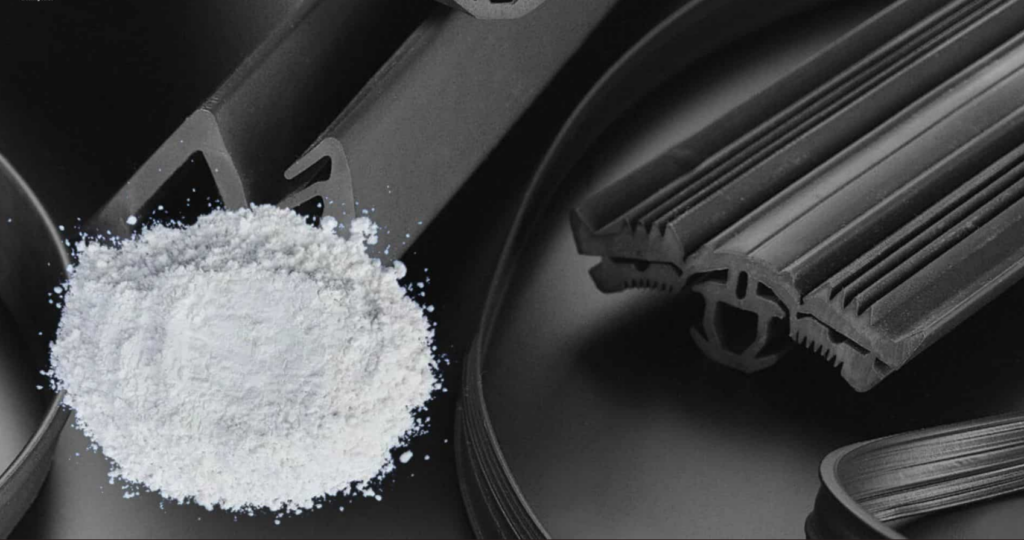
Calcium carbonate is widely used in rubber manufacturing as a functional filler that enhances product properties and production efficiency.
Reducing Production Costs
Calcium carbonate helps decrease the consumption of more expensive raw materials, making manufacturing more cost-effective.
Improving Hardness
It increases the strength and rigidity of rubber products, resulting in improved durability.
Enhancing Wear Resistance
Rubber compounds containing calcium carbonate are better able to withstand prolonged use and mechanical stress.
Optimizing Manufacturing Processes
Calcium carbonate improves mixing and processing characteristics, facilitating smoother production operations.
How Rubber Fillers Improve Product Performance
Rubber fillers are used to enhance the physical and mechanical properties of both natural and synthetic rubber.
Increased Durability
Fillers improve the ability of rubber products to withstand stress and heavy-duty applications.
Reduced Shrinkage
They help maintain dimensional stability and preserve the shape of finished products.
Improved Flexibility
Rubber fillers contribute to achieving an optimal balance between strength and elasticity.
Better Surface Finish
They provide smoother surfaces and enhance the overall appearance of rubber products.
The Role of Calcium Carbonate in Tire Manufacturing

The tire industry relies on high-quality materials to ensure safety, durability, and performance. Calcium carbonate is one of the key additives used in tire production.
Improved Abrasion Resistance
It helps tires withstand continuous friction and intensive use.
Enhanced Stability
Calcium carbonate contributes to better balance and stability during vehicle operation.
Lower Manufacturing Costs
Its use reduces the amount of primary raw materials required in tire compounds.
Improved Material Distribution
It promotes uniform dispersion within the rubber mixture, ensuring consistent product quality.
Types of Calcium Carbonate Used in Rubber Applications
Different forms of industrial calcium carbonate are used depending on the desired product characteristics.
Ground Calcium Carbonate (GCC)
The most commonly used type due to its affordability and versatility.
Surface-Treated Calcium Carbonate
Offers improved compatibility with rubber compounds and enhanced performance.
Ultrafine Calcium Carbonate
Used in premium rubber products that require superior quality and performance.
High-Purity Calcium Carbonate
Ideal for specialized industrial applications where consistency and purity are critical.
Improving Rubber Quality with Calcium Carbonate
Calcium carbonate enhances several technical properties of rubber products.
Increased Tensile Strength
It improves the material’s ability to withstand stress and pressure.
Enhanced Heat Resistance
Rubber compounds become more capable of performing under demanding temperature conditions.
Improved Chemical Stability
Calcium carbonate helps reduce the impact of environmental and chemical factors on the final product.
Extended Service Life
It contributes to longer-lasting rubber products with improved durability.
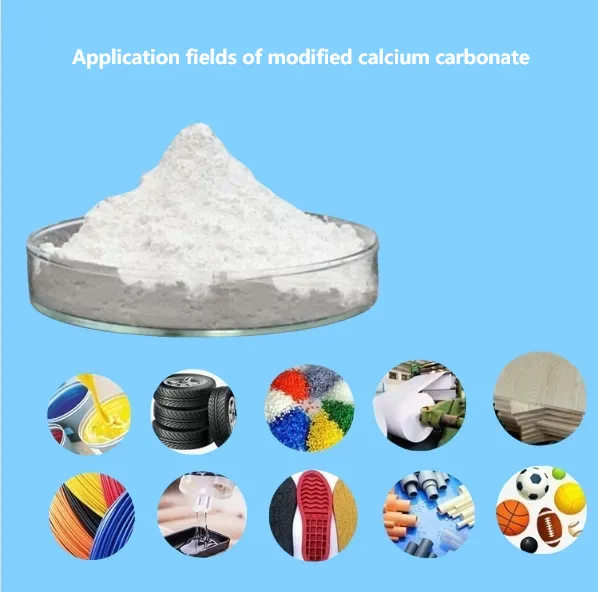
Industries That Depend on Calcium Carbonate and Rubber
Calcium carbonate is used in numerous rubber-based industrial sectors.
Tire Manufacturing
Used to improve durability while lowering production costs.
Rubber Footwear Production
Enhances flexibility, comfort, and overall product quality.
Hose Manufacturing
Improves resistance to pressure, wear, and mechanical stress.
Industrial Insulation Products
Contributes to better physical and performance characteristics.
Challenges of Using Calcium Carbonate in Rubber Applications
Despite its many benefits, manufacturers must consider several factors when using calcium carbonate.
Selecting the Right Particle Size
Particle size significantly affects the performance and quality of the final product.
Non-Uniform Distribution
Poor dispersion can negatively impact mechanical properties.
Low-Quality Raw Materials
Using inferior calcium carbonate grades can reduce overall product performance.
Application-Specific Requirements
Different rubber products require different calcium carbonate specifications.
Future of Calcium Carbonate in the Rubber Industry
As industrial technology advances, demand for cost-effective and high-performance materials such as calcium carbonate continues to grow.
Development of More Sustainable Products
Manufacturers are increasingly focused on reducing raw material consumption and improving sustainability.
Advanced Manufacturing Technologies
New processing techniques are helping achieve higher quality and performance standards.
Growing Global Demand
The expansion of rubber and tire manufacturing industries is driving increased consumption worldwide.
Supporting Industrial Innovation
Calcium carbonate continues to enable the development of more efficient and competitive rubber products.
Frequently Asked Questions (FAQs)
Why is calcium carbonate used in rubber manufacturing?
It helps improve product quality, enhance mechanical properties, and reduce manufacturing costs.
Does calcium carbonate affect tire quality?
Yes. It contributes to improved durability, abrasion resistance, and overall tire performance.
What is the difference between ground and treated calcium carbonate?
Surface-treated calcium carbonate offers better compatibility with rubber compounds and often provides enhanced performance.
Which industries rely most on calcium carbonate in rubber applications?
Major industries include tire manufacturing, rubber footwear production, hose manufacturing, and industrial insulation products.
Conclusion
Calcium carbonate has become an indispensable material in the rubber and tire industry due to its ability to improve product quality while reducing production costs. It enhances durability, flexibility, wear resistance, and manufacturing efficiency, making it a strategic choice for manufacturers worldwide. As industrial innovation continues to advance, the use of calcium carbonate is expected to expand further, supporting the development of more efficient, sustainable, and high-performance rubber products in the future.