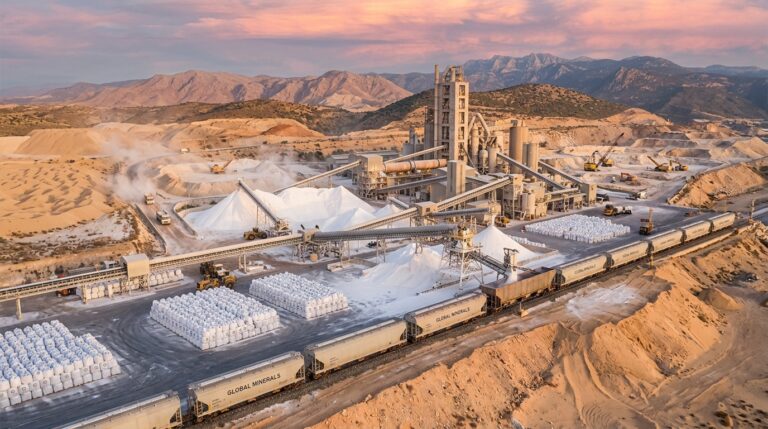
The Role of Calcium Carbonate in Ceramic and Tile Manufacturing
The construction and interior finishing industries continue to evolve as demand grows for products that combine durability, aesthetics, and high performance. Among the most important sectors supporting modern construction is Ceramic and Tile Manufacturing, which relies heavily on the careful selection of raw materials to achieve consistent quality and long-lasting results.
One of the key ingredients behind successful ceramic production is Calcium Carbonate in Ceramic Manufacturing. This naturally occurring mineral plays a vital role in improving processing characteristics, enhancing the final appearance of products, and reducing overall production costs. As a result, it has become a fundamental component in ceramic and tile factories worldwide.
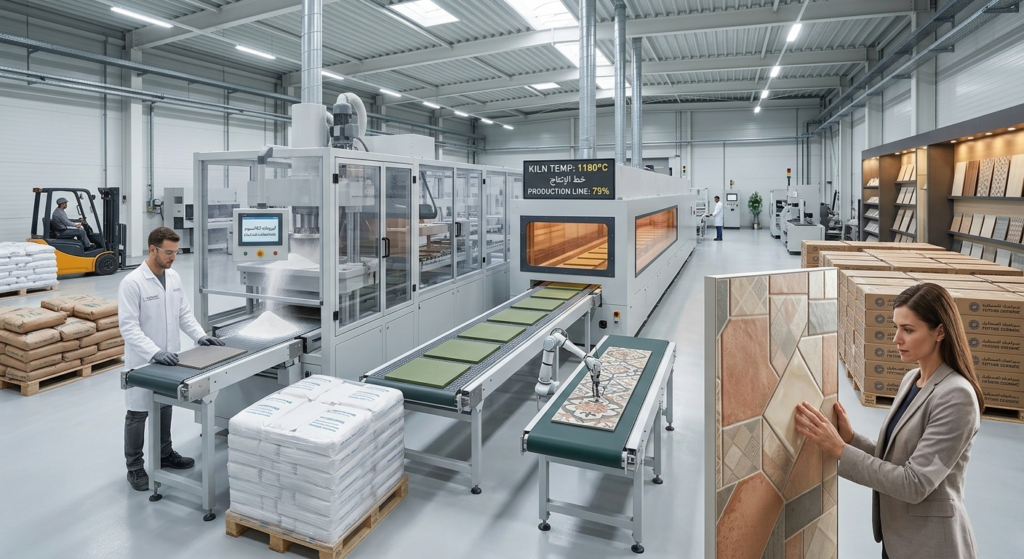
Calcium Carbonate in Ceramic Manufacturing and Its Importance
Calcium carbonate is a mineral extracted from limestone deposits and processed for industrial applications. In the ceramic industry, it is incorporated into production formulas to improve both manufacturing efficiency and product performance.
Its importance lies in its ability to enhance the physical and chemical characteristics of ceramic bodies before firing while also contributing to the strength and appearance of finished products.
Key benefits include:
• Improving the consistency of ceramic mixtures.
• Enhancing surface smoothness.
• Supporting chemical stability.
• Reducing reliance on higher-cost materials.
• Improving firing performance in industrial kilns.
How It Fits Into Raw Materials for Ceramics
The ceramic industry depends on a combination of minerals that are blended according to precise formulations. These Raw Materials for Ceramics determine the final characteristics of tiles, sanitary ware, and other ceramic products.
Calcium carbonate is commonly combined with:
• Clay.
• Feldspar.
• Silica.
• Various mineral oxides.
Within these mixtures, calcium carbonate helps create a balanced composition that supports shaping, drying, and firing processes while improving production stability.
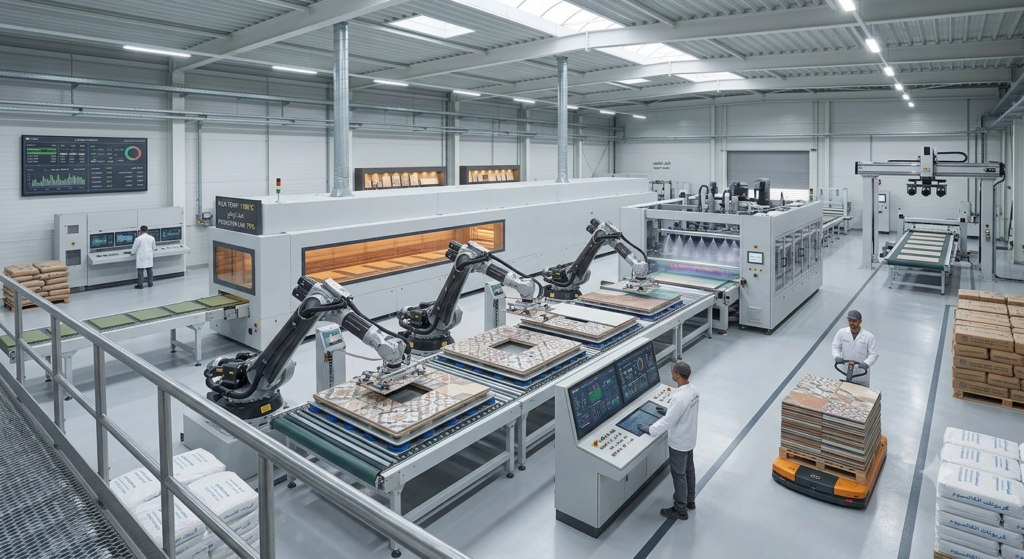
The Impact on Tile and Ceramic Quality
Manufacturers constantly strive to produce ceramic products that combine visual appeal with mechanical strength. Calcium carbonate plays a significant role in achieving this balance and improving overall Tile and Ceramic Quality.
Enhanced Surface Finish
The material contributes to smoother and more uniform surfaces, resulting in a premium appearance that meets modern market expectations.
Improved Structural Strength
When high-purity grades are used, calcium carbonate can support stronger internal structures, helping ceramic products withstand daily use and environmental conditions.
Better Color Performance
Its natural whiteness can improve brightness and color consistency, especially in premium ceramic and tile applications.
Reduction of Manufacturing Defects
Uniform particle distribution helps minimize cracking, shrinkage, and deformation during firing and cooling stages.
The Role of Industrial Calcium Carbonate in Production
Not all calcium carbonate products are identical. Manufacturers often choose specialized grades of Industrial Calcium Carbonate designed specifically for ceramic applications.
These products offer:
• High purity levels.
• Controlled particle size distribution.
• Excellent dispersion characteristics.
• Consistent quality between production batches.
• Improved manufacturing reliability.
Such properties help factories maintain stable production conditions and achieve higher-quality results.
Influence on Firing Processes
Firing is one of the most critical stages in ceramic production. During this process, raw materials undergo physical and chemical transformations that determine the final characteristics of the product.
Calcium carbonate contributes by:
• Supporting the development of the desired crystalline structure.
• Enhancing chemical reactions during firing.
• Improving dimensional stability.
• Helping achieve optimal product density.
These benefits allow manufacturers to produce durable and aesthetically pleasing ceramic products with greater consistency.
How Calcium Carbonate Reduces Production Costs
Beyond its technical advantages, calcium carbonate offers substantial economic benefits.
Manufacturers use it to:
• Lower raw material expenses.
• Improve material utilization rates.
• Reduce production waste.
• Minimize the number of defective products.
• Increase overall operational efficiency.
These cost-saving advantages explain why calcium carbonate remains one of the most widely used minerals in ceramic manufacturing worldwide.
Choosing the Right Calcium Carbonate for Ceramic Production
Selecting the appropriate grade is essential for achieving the desired product quality and production efficiency.
Important selection criteria include:
• Chemical purity.
• Particle size and uniformity.
• Moisture content.
• Brightness and whiteness.
• Compatibility with manufacturing requirements.
Careful selection ensures consistent production performance and optimal product characteristics.
Future Trends in Ceramic and Tile Manufacturing
As manufacturing technologies continue to advance, the demand for high-quality calcium carbonate products is expected to increase.
Future developments may include:
• More refined particle engineering.
• Improved processing technologies.
• Enhanced material performance.
• Greater sustainability in ceramic production.
• Increased efficiency in large-scale manufacturing.
These innovations will further strengthen the role of calcium carbonate in supporting modern ceramic and tile industries.
Conclusion
Calcium Carbonate in Ceramic Manufacturing remains a cornerstone material in the production of high-quality ceramic and tile products. Its ability to improve processing efficiency, enhance product performance, reduce manufacturing costs, and support consistent quality makes it indispensable to modern production facilities. As technology advances and industry demands continue to evolve, calcium carbonate will remain a key ingredient in driving innovation and excellence within the ceramic sector.
Frequently Asked Questions
• Why is calcium carbonate important in ceramic manufacturing?
It improves mixture consistency, enhances product quality, supports efficient production processes, and contributes to cost reduction.
• Does calcium carbonate affect tile and ceramic quality?
Yes. It helps improve strength, appearance, color consistency, and reduces manufacturing defects.
• What is the difference between industrial calcium carbonate and standard grades?
Industrial grades typically offer higher purity, controlled particle sizes, and better consistency for specialized manufacturing applications.
• Can calcium carbonate help reduce production costs?
Yes. It lowers material costs, improves efficiency, reduces waste, and minimizes defective products.
• How do manufacturers choose the right calcium carbonate?
Selection is based on purity, particle size, moisture content, brightness, and compatibility with specific production requirements.