Secrets of Choosing Calcium Carbonate for Cable Manufacturing in Electrical Wires
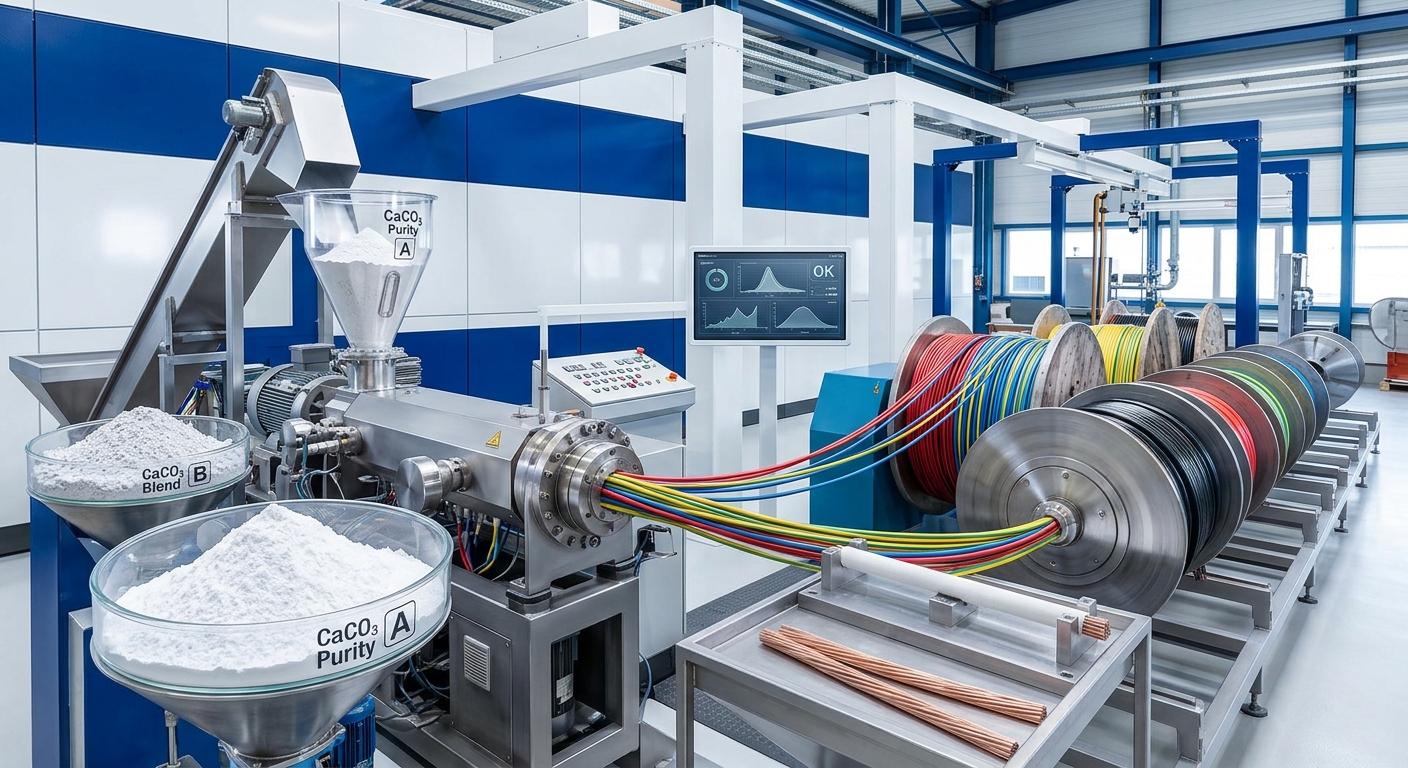
Calcium Carbonate for Cable Manufacturing is one of the most important fillers behind the performance of insulation and outer sheathing in electrical wires.
It looks like a simple ingredient, yet it determines the quality, cost, and service life of the product.
In a market where safety and efficiency requirements keep rising, choosing this material is no longer a casual purchasing decision but an engineering step that affects a cable’s flexibility, heat resistance, and electrical stability.
Here we reveal the key secrets that help manufacturers choose the most suitable grade, and we answer the most frequently asked questions in this field.
Why Is This Material Used in Cable Compounds?
Calcium carbonate is added to polyvinyl chloride (PVC), polyethylene, and other polymers used to insulate and sheath wires.
The first motive is cost reduction, since it partially replaces the more expensive resin. But the benefit does not stop at economics: it also improves stiffness, dimensional stability, and surface smoothness.
This is why Calcium Carbonate for Cable Manufacturing holds a permanent place in most insulation and sheathing formulations around the world, provided it is selected precisely and its loading is carefully controlled.
Available Types and Their Properties
Two main types are available on the market:
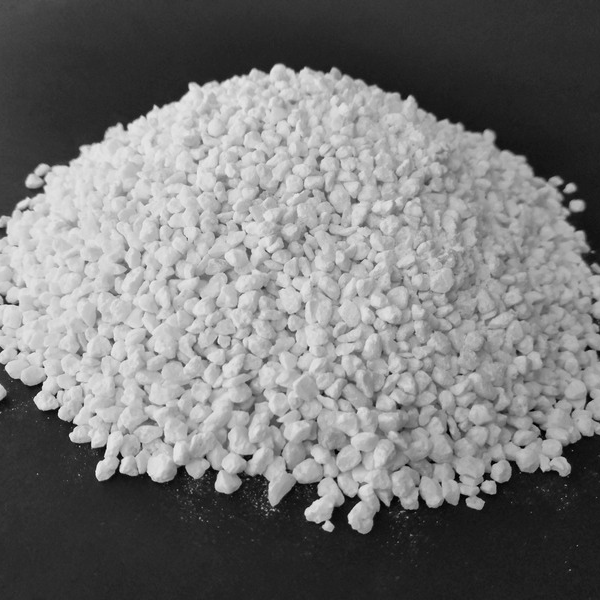
- Ground Calcium Carbonate (GCC): extracted from limestone or marble and ground to the required fineness. It suits most general applications thanks to its low price.
- Precipitated Calcium Carbonate (PCC): produced chemically with finer, more uniform particles. It is used when higher mechanical properties or a smoother surface are required.
A third option is surface-treated grades, which are particles coated with stearic acid or a similar agent to improve their interaction with the polymer.
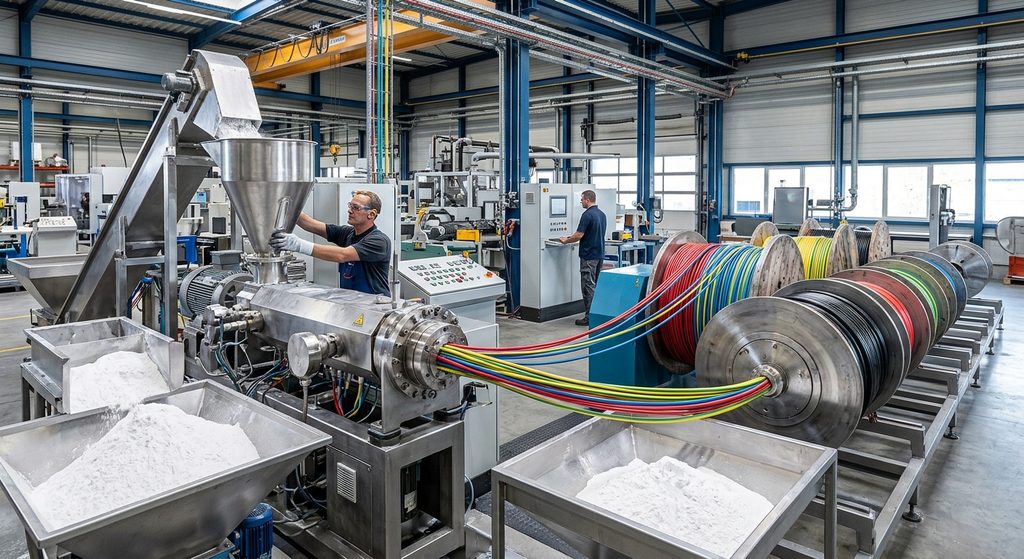
Criteria for Evaluating Calcium Carbonate for Cable Manufacturing
When assessing a grade, a set of technical indicators should be considered. The most important are:
1. Particle Size and Distribution
Finer particles give a smoother surface and better mechanical properties, but they raise viscosity and make processing harder. A narrow, uniform distribution reduces the risk of agglomerates that weaken the insulation.
2. Moisture Content
High moisture is the enemy of electrical insulation. It causes bubbles during extrusion and lowers dielectric strength. Moisture should therefore be kept as low as possible, with sealed storage to prevent the material from reabsorbing it later.
3. Purity Level
Impurities, especially conductive minerals and iron oxides, harm insulating properties. It is best to choose a high-purity grade with minimal foreign matter.
4. Surface Treatment
Coating improves how well the material disperses inside the polymer and reduces water absorption, which in turn benefits extrusion flow and surface quality.
Its Impact on the Final Cable’s Properties
The grade you choose affects several aspects of product performance, and the role of Calcium Carbonate for Cable Manufacturing shows clearly in the following points:
- Flexibility: too much filler makes the sheath hard and less flexible.
- Electrical resistance: clean, dry grades preserve insulating properties.
- Heat resistance: it contributes to dimensional stability and works with heat stabilizers to improve performance.
- Surface appearance: it gives the outer sheath a smooth look and an even gloss.
- Mechanical properties: tensile strength and elongation at break are affected by the filler loading and particle size.
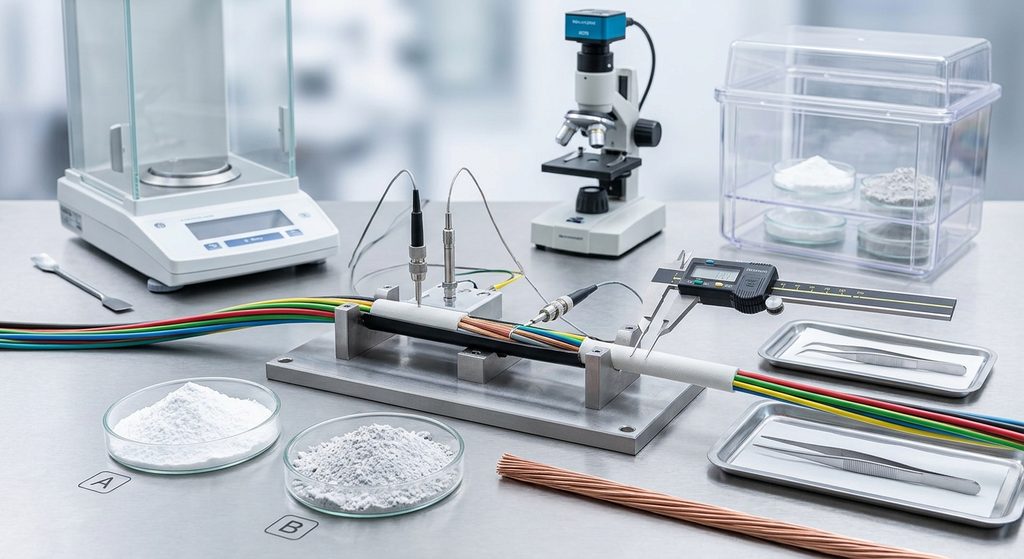
Common Mistakes to Avoid
Some manufacturers make mistakes that cost them dearly, including:
- Choosing a grade based on price alone, without considering technical specifications.
- Skipping the moisture check on every incoming shipment.
- Raising the filler loading to cut costs until mechanical properties deteriorate.
- Not running small-scale trials before moving to full production.
- Ignoring compatibility with the stabilizers and plasticizers used in the formulation.
To confirm the choice is sound, tests such as insulation resistance measurement, tensile strength, and thermal aging are carried out.
Stable quality from Calcium Carbonate for Cable Manufacturing is built on regular inspection and a reliable supplier who provides a certificate of analysis for every batch.
Future Outlook and Development Trends
The cable sector is moving toward halogen-free, low-smoke compounds and stricter safety standards.
This creates a need for purer, finer grades that can be used alongside flame retardants. Interest in recycled materials and sustainable solutions is also growing.
With this shift, the material remains a practical choice as long as specifications are carefully considered, and specialized grades serving these advanced applications are expected to emerge.
Frequently Asked Questions
1. What is the right percentage of calcium carbonate in a cable compound?
There is no single ratio that suits everyone; it varies with the cable type, its application, and the required properties. In general sheathing, loadings are higher than in sensitive primary insulation. It is best to run lab trials to find the ratio that balances cost and performance.
2. Does moisture really affect insulation quality?
Yes. Moisture causes bubbles and surface defects during extrusion, lowers insulation resistance, and increases the risk of electrical leakage. The material should therefore be dried and stored in sealed containers away from humid conditions.
3. When should I prefer the surface-treated grade?
It is preferred when you need better dispersion inside the polymer, smoother processing flow, and lower water absorption. It is especially suitable for applications that demand stable mechanical and electrical properties.
4. How do I verify the quality of a shipment before using it?
Request a certificate of analysis covering particle size, moisture, and purity, then run an independent lab test on a sample. Try it in a small batch before approving it, while monitoring extrusion behavior, product appearance, and insulation tests.
Conclusion
It is clear from the above that a cable’s success does not rest on the copper conductor alone, but on fine details in the insulation and sheathing compounds, the first of which is choosing the right filler.
When a manufacturer chooses Calcium Carbonate for Cable Manufacturing well and controls its loading and specifications, the result is a more stable product, at lower cost, and better able to compete.
Investing in a reliable supplier and regular testing is therefore the path to cables that earn market trust and withstand operating challenges.