Syrian Calcium carbonate quality Compared to Imported Products
Calcium carbonate quality has become a central topic of discussion among industrialists and investors in Syria, especially with the growing demand for this vital material across sectors such as plastics, paints, paper, and detergents. For a long time, it was widely believed that imported products automatically outperformed their local counterparts.
However, the notable progress made by Syrian factories in recent years has redrawn this equation entirely.
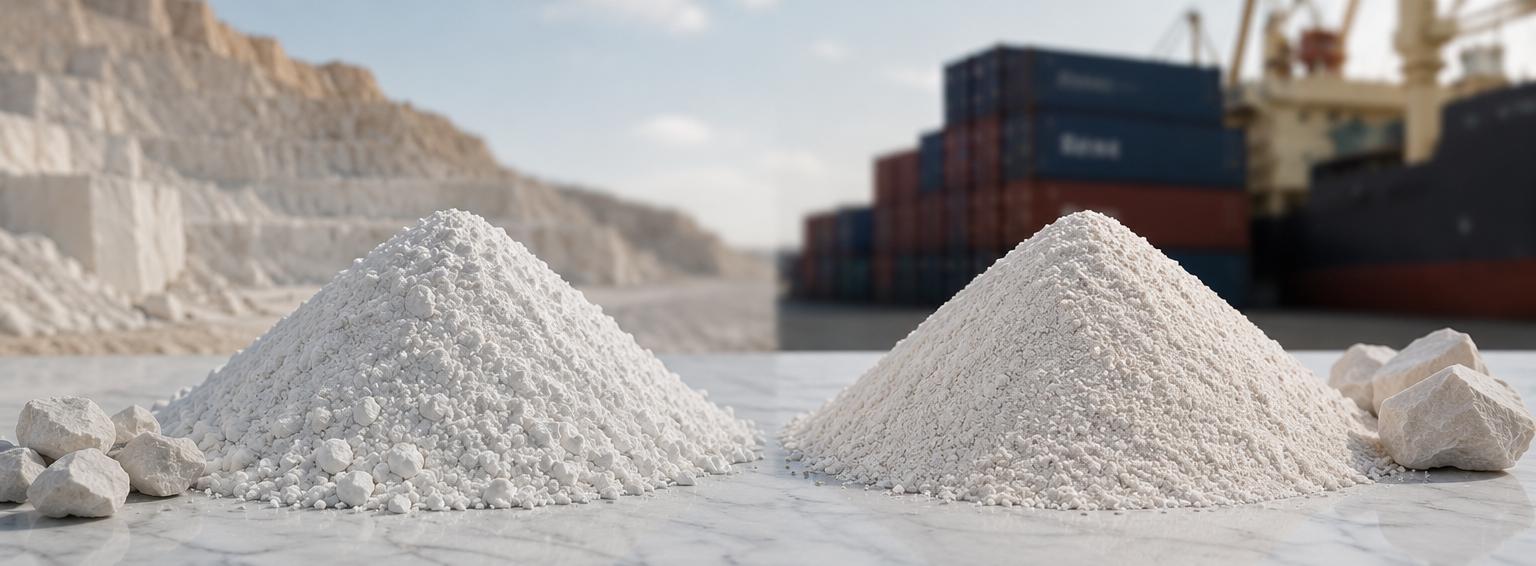
Locally produced calcium carbonate quality is now capable of competing with imported products and at times surpassing them in terms of suitability for the local market and overall cost.
We explore the key factors that make Syrian calcium carbonate a trustworthy choice against imported alternatives.
First: Technical Standards and Laboratory Specifications
When discussing calcium carbonate quality, it is essential to examine the precise technical standards by which the material is measured, including:
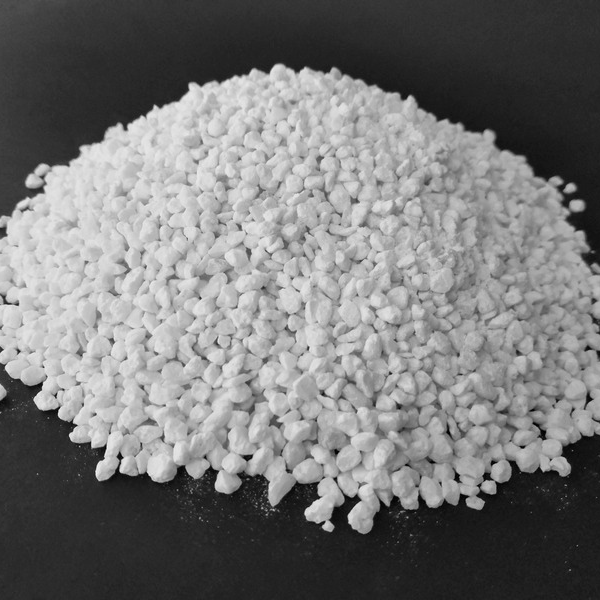
- The purity level of calcium carbonate (CaCO3) and the absence of impurities.
- The whiteness degree of the material, a decisive factor in the paint and plastics industries.
- Particle size and consistency, which directly affect the performance of the final product.
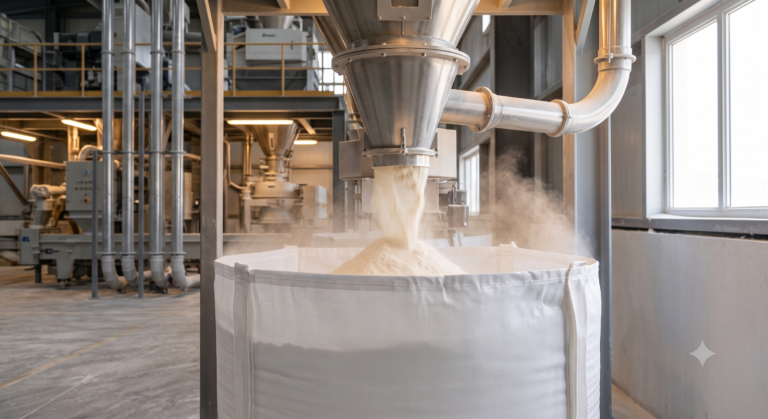
Many Syrian factories have proven their ability to meet these standards with high precision, relying on modern production lines and regular laboratory testing. This makes local calcium carbonate quality very close to and at times fully matching its global counterpart.
Second: Adaptability to the Local Market
One of the most notable differences between local and imported products is the ability of local factories to tailor their product to the specific needs of Syrian industries, including:
- Offering different fineness grades depending on the nature of the consuming industry.
- Responding quickly to customization or adjustment requests from clients.
- A deeper understanding of local storage and transport conditions, which positively affects product stability.
This flexible adaptability gives local calcium carbonate quality a competitive edge rarely found in imported products, which are often manufactured according to generic specifications that do not account for the specifics of each market.
Third: Consistency in Specifications Across Shipments
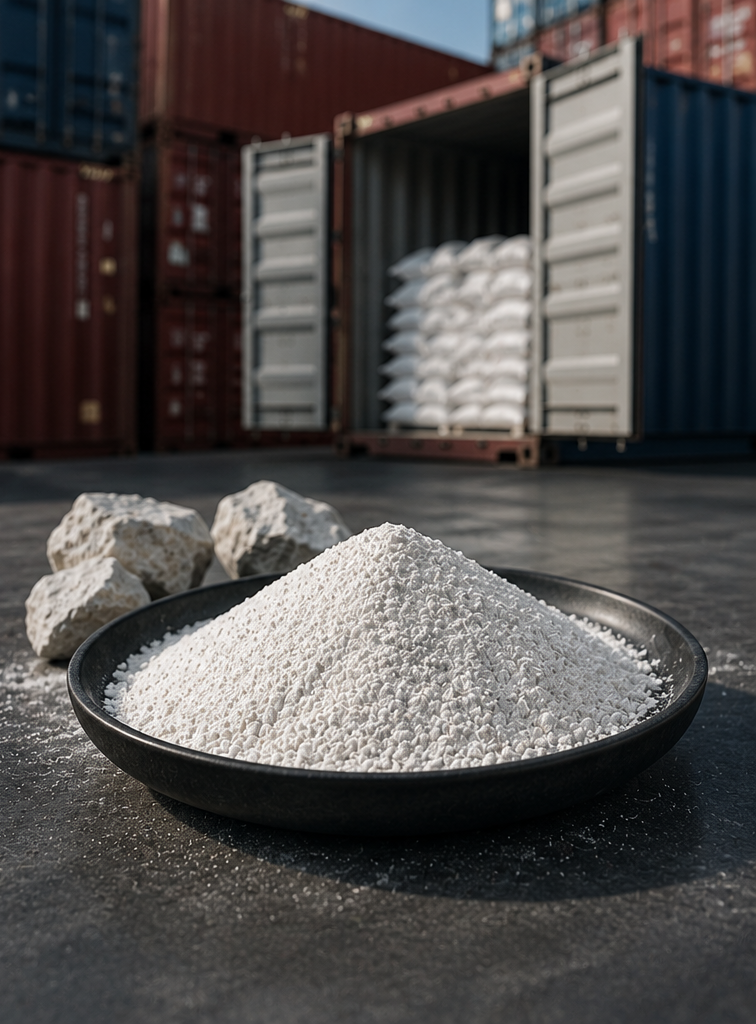
One challenge sometimes faced with imported products is inconsistency in specifications from one shipment to another, particularly when dealing with multiple suppliers or unstable sources. In contrast:
- Serious Syrian factories rely on a fixed source of raw material, reducing fluctuation in specifications.
- Proximity of the production line to the client allows for direct monitoring of any quality deviation and quick correction.
- Direct communication with the local factory makes it easier to resolve any issue related to technical conformity.
This relative consistency reinforces confidence in Syrian calcium carbonate quality as a choice whose performance can be reliably predicted over the long term.
Fourth: Total Cost Versus Added Value
When evaluating any raw material, it is not enough to consider the direct price alone the total cost must also account for:
- Shipping and customs clearance costs associated with imported products.
- Waiting times and logistical risks that may affect the continuity of production lines.
- Flexibility in order size, without the large quantity commitments often required in importing.
When these factors are considered together, it becomes clear that local calcium carbonate quality, combined with its lower overall cost, makes it a more economically viable choice than its imported counterpart.
Fifth: Supporting the National Economy and Industrial Sustainability
Relying on local products carries a strategic dimension beyond the technical aspect, as it contributes to:
- Reducing dependence on foreign currency allocated for imports.
- Creating jobs and developing the local industrial sector linked to mining and processing.
- Strengthening national supply chains and reducing vulnerability to fluctuations in global markets.
In this way, investing in Syrian calcium carbonate quality benefits not only the factory or the consumer, but also serves the interests of the national economy as a whole.
Frequently Asked Questions About Syrian Calcium Carbonate Quality Compared to Imported Products:
1. Does the quality of Syrian calcium carbonate actually match imported products?
Yes, many Syrian factories have proven their ability to meet precise standards in terms of purity level, whiteness degree, and particle size consistency, through modern production lines and regular laboratory testing, making them very close to international specifications and sometimes fully matching them.
2. What advantage does the local product offer that isn’t easily available in imported products?
The main advantage is the ability to adapt to local market needs, through customizing different fineness levels, quickly responding to customization requests, and having a deeper understanding of local storage and transportation conditions — something imported products, manufactured to general specifications, don’t offer.
3. Why is the overall cost of the local product lower despite similar quality?
Because imported products come with additional costs such as shipping and customs clearance, along with waiting periods and logistical risks, while the local product offers flexibility in order sizes without requiring large quantity commitments, making its overall cost more economically viable.
4. Does choosing the local product impact the national economy?
Yes, directly. Relying on Syrian calcium carbonate reduces the need for foreign currency allocated for imports, supports job opportunities in the local industrial sector, and strengthens the stability of national supply chains against global market fluctuations.
Conclusion
In light of the above, it is clear that the comparison between local and imported products no longer automatically favors the foreign option, as was previously assumed.
Syrian factories have proven that locally produced calcium carbonate quality can reach world-class levels, accompanied by adaptive flexibility, consistent specifications, lower overall cost, and a positive impact on the national economy.
With continued investment in technical and laboratory development, the opportunity remains open for Syrian industry to prove that excellence is not imported, it is made locally, with efficiency and expertise.