Calcium Carbonate and Its Role in Modern Chemical Industries
Calcium carbonate in modern chemical industries represents one of the most important silent success stories of industrial development, as it is the material that enters into the composition of hundreds of products without consumers noticing its direct presence.
From plastic pipes to medicine boxes, and from paints to construction materials, this fine white material permeates the entire fabric of modern industry.
In light of the accelerating development witnessed in industrial chemistry, calcium carbonate in modern chemical industries has become an indispensable element, thanks to its unique properties, diverse uses, and lower cost compared to alternative materials.
Here we address the most prominent roles this material plays at the heart of the contemporary chemical industry.
First: The Chemical Properties That Explain Its Industrial Importance
To understand the position of this material in the chemical industry, we must pause on its unique properties that make it an industrially desirable material, including:
Its relative chemical stability and lack of negative reactivity with most other substances.
Its capacity for fine grinding down to nanoscale levels in some advanced applications.
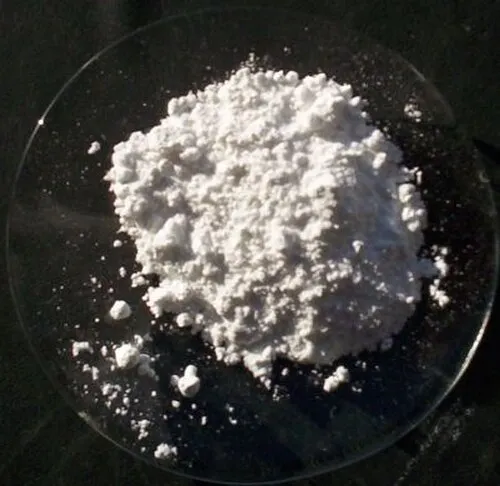
Its high degree of whiteness, which is a fundamental property in many visual and aesthetic industries.
These properties combined are what make calcium carbonate an essential material that is difficult to do without in many chemical formulations.
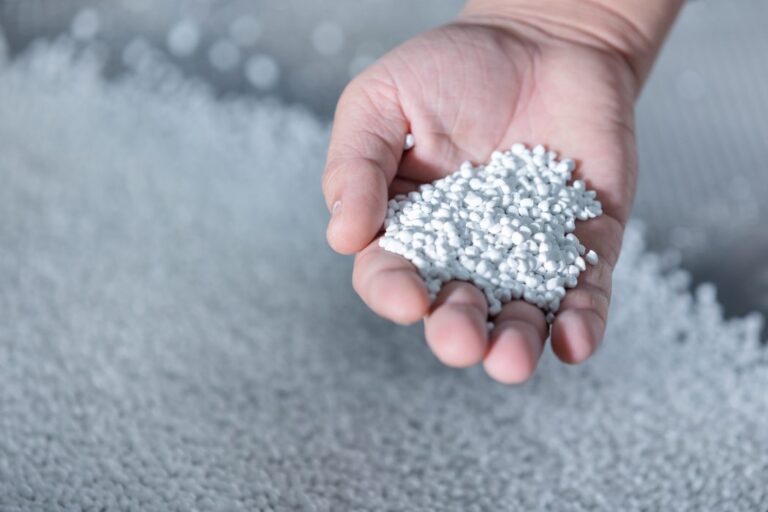
Second: Its Role in the Plastics and Polymers Industry
Among the most prominent areas where calcium carbonate in modern chemical industries stands out is the plastics sector, where it is used as a primary filler material to achieve:
Improved hardness and mechanical resistance of plastic products.
Reduced overall manufacturing costs without negatively affecting final product quality.
Improved thermal processability of materials during forming and molding operations.
This vital role makes calcium carbonate an essential partner in nearly every modern plastic production line.

Third: Its Use in the Paint and Coatings Industry
Calcium carbonate in modern chemical industries also plays a pivotal role in paint formulations, as it is used to:
Increase the dry hardness ratio of paint without affecting its spreadable consistency.
Improve the degree of coverage and whiteness in both water-based and oil-based paints.
Reduce consumption of more costly binding materials by using carbonate as an effective filler material.
Through this role, calcium carbonate contributes to achieving a precise balance between quality and cost within the paint industry.
Fourth: Its Applications in the Pharmaceutical and Food Industries
Many may be surprised that this material extends to cover sensitive sectors such as the pharmaceutical and food industries, where it is used at very high purity grades for:
Producing calcium-rich dietary supplements to support bone health.
Using it as a safe filler material in some tablets and pharmaceutical preparations.
Incorporating it into some food industries as an added mineral source.
This diversity in sensitive applications reflects the extent of industrial trust in the purity level that can be achieved in this material when properly processed.
Fifth: Its Role in the Paper and Detergent Industries
No discussion of calcium carbonate in modern chemical industries is complete without mentioning its role in the paper and detergent industries, where it contributes to:
Improving paper brightness and thickness without a significant increase in cost.
Enhancing printability on paper by improving surface smoothness.
Acting as a gentle polishing and cleaning agent in some household and industrial detergent formulations.
These multiple uses confirm that this material is not confined to a single industry, but is a horizontal element that spans entirely different industrial sectors.
Sixth: The Future of Calcium Carbonate Amid Continuous Chemical Development
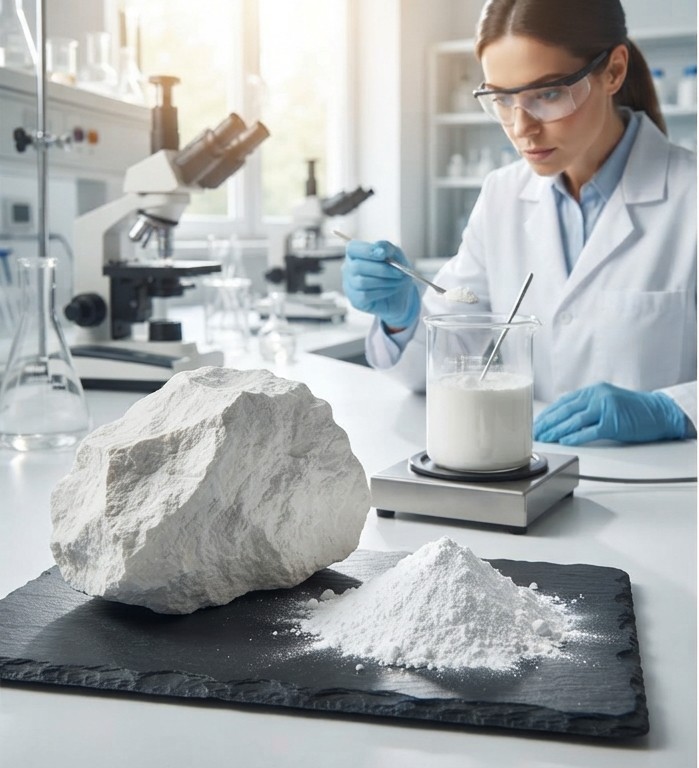
As research in advanced chemical materials progresses, attention is turning toward developing more complex applications for this material, through:
Producing precipitated calcium carbonate (PCC) with precise specifications for specialized nano applications.
Improving surface treatment techniques to broaden the scope of its interaction with organic materials.
Integrating it into hybrid chemical compounds that serve future industries such as energy and smart packaging.
This continuous development confirms that the future of this material still holds broad horizons for growth and innovation.
Frequently Asked Questions About Calcium Carbonate in Modern Chemical Industries
1. What properties make calcium carbonate a desirable material in chemical industries?
This material is characterized by its chemical stability and lack of negative reactivity with most other substances, in addition to its capacity for fine grinding down to nanoscale levels, and its high degree of whiteness — properties that make it an essential element in numerous industrial formulations.
2. Why is calcium carbonate widely used in the plastics industry?
Because it works as an effective filler material that improves the hardness and mechanical resistance of plastic products, and reduces overall manufacturing costs without negatively affecting quality, while also improving thermal processability during forming.
3. Can calcium carbonate be used safely in the food and pharmaceutical industries?
Yes, when processed at very high purity grades, it is safely used in producing calcium-rich dietary supplements, as a filler material in some tablets and pharmaceutical preparations, in addition to being incorporated into some food products as an added mineral source.
4. What are the most notable future developments expected for this material?
Research is heading toward producing precipitated calcium carbonate with precise specifications for specialized nano applications, improving surface treatment techniques, and integrating it into hybrid chemical compounds that serve future industries such as energy and smart packaging.
Conclusion
In conclusion, it is clear that calcium carbonate in modern chemical industries is not merely a marginal raw material, but rather a hidden backbone supporting a wide range of vital industries, from plastics and paints to pharmaceuticals, paper, and detergents.
Thanks to its unique properties and diverse uses, this material continues to prove its worth as one of the most important elements in the world of contemporary industrial chemistry.
With continued research and development, the role of calcium carbonate is expected to expand further, remaining present at every step of upcoming industrial progress.