Stages of Calcium Carbonate Production at Al-Siraj Factory
This article provides a practical and detailed explanation of the stages of calcium carbonate production as implemented in an integrated production line like Al-Siraj Factory, from raw material sourcing to packaging and quality control. It covers two common production routes: mechanical grinding (GCC) and chemical precipitation (PCC), along with notes on quality control, safety, and environmental practices.
Quick Overview of the Two Production Routes
GCC (Ground Calcium Carbonate): Produced by grinding and refining limestone or marble into powder with various particle sizes. This process relies mainly on mechanical treatment.
PCC (Precipitated Calcium Carbonate): Produced chemically by converting quicklime (CaO → Ca(OH)₂), then reacting it with carbon dioxide to form a very fine CaCO₃ precipitate. PCC allows greater control over particle size and surface area.
Al-Siraj Factory may operate one or both processes depending on market demand and targeted industrial applications.
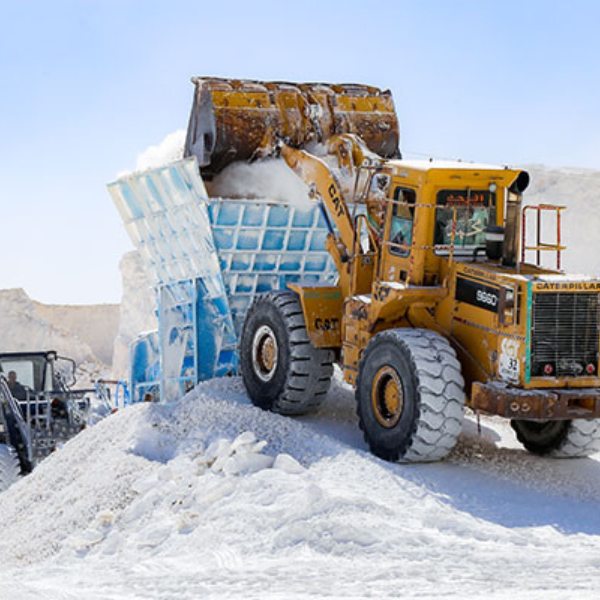
1 Raw Material Sourcing and Extraction
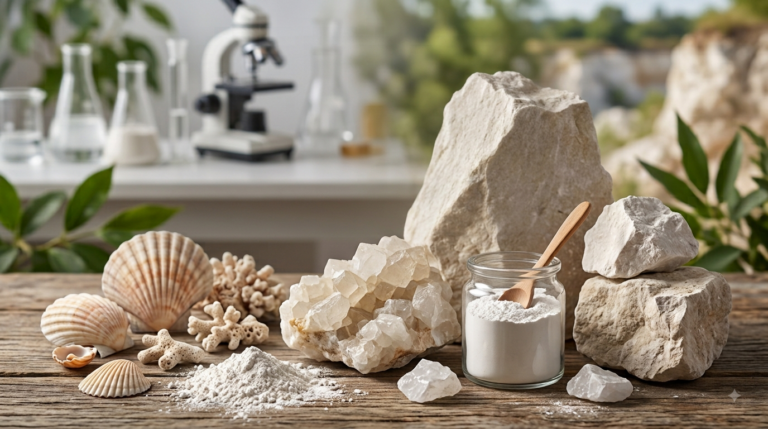
The first step is securing raw materials (limestone, chalk, or marble):
Quarry evaluation (CaCO₃ purity, impurities like silica and iron)
Extraction and transportation to the plant or crushing yard
At Al-Siraj Factory, regular inspections are conducted to ensure consistent chemical composition.
2 Crushing and Primary Screening
Raw stones are crushed into manageable sizes:
Primary crushers (jaw or impact crushers)
Initial screening to separate oversized materials
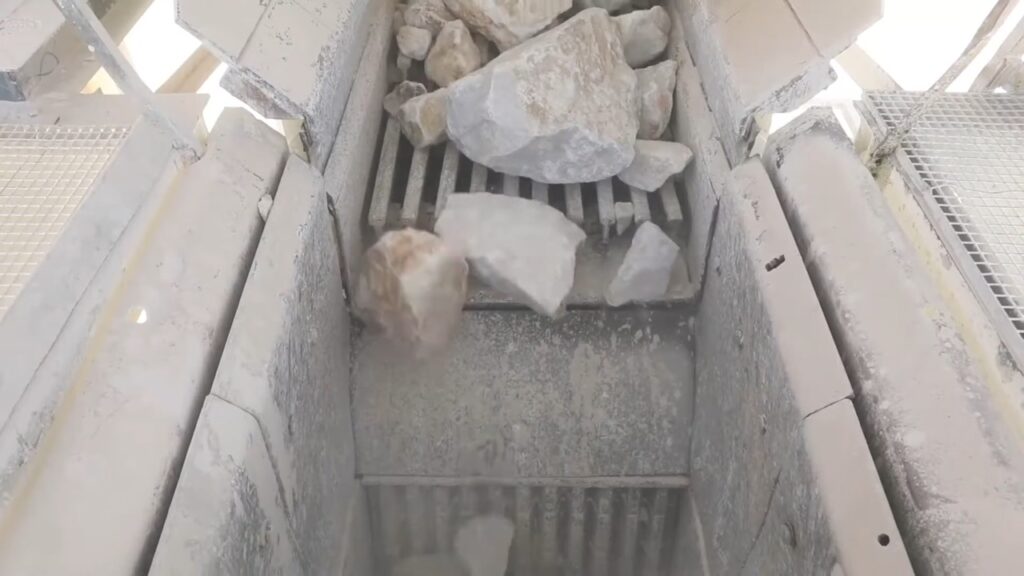
The goal is to prepare material for efficient grinding.
3 Grinding and Classification (GCC Route)
For GCC production:
Material enters mills (ball mills, vertical mills, or Raymond mills)
Air classifiers or sieves control particle size distribution (PSD)
Micronizers may be used for ultra-fine grades
Drying systems adjust moisture if necessary
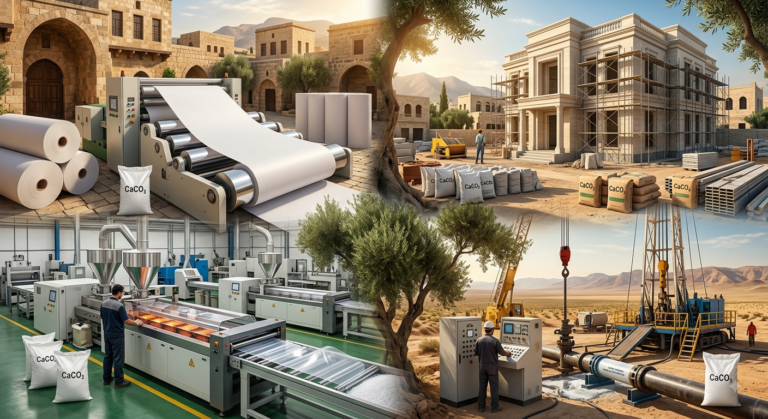
Al-Siraj optimizes grinding speed and classification to produce grades suitable for industries like paper, coatings, and plastics.
4 Chemical Route — PCC Production (if applied)
Main steps include:
Calcination: Heating limestone to produce calcium oxide (CaO)
Slaking: Adding water to produce calcium hydroxide (Ca(OH)₂)
Carbonation: Passing CO₂ through the slurry to form CaCO₃ precipitate
Separation & Filtration: Using filter presses
Washing & Drying: Removing residual ions and moisture
Final Grinding & Classification: Achieving desired particle size and surface properties
This method allows precise control over crystal shape, surface area, and brightness.
5 Surface Treatment and Modification
For both GCC and PCC, surface treatment may be applied using:
Silanes
Stearates
Fatty acids
Polymers
This improves compatibility with resins and reduces oil absorption. Al-Siraj offers customized treated grades for plastics, coatings, and paper.
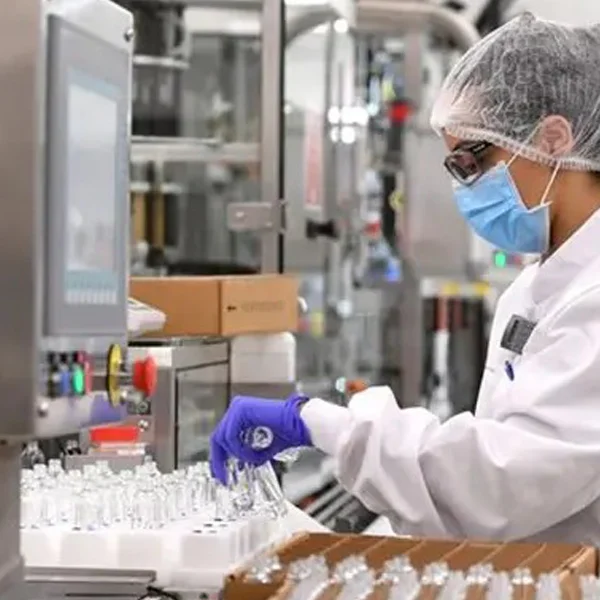
6 Quality Control and Laboratory Testing
Quality control is essential throughout production:
CaCO₃ purity (%)
Particle size distribution (PSD)
Specific surface area (BET)
Bulk density
Loss on Ignition (LOI) and moisture
Whiteness index
Al-Siraj operates an in-house laboratory for continuous testing and certification compliance.
7 Packaging, Storage, and Logistics
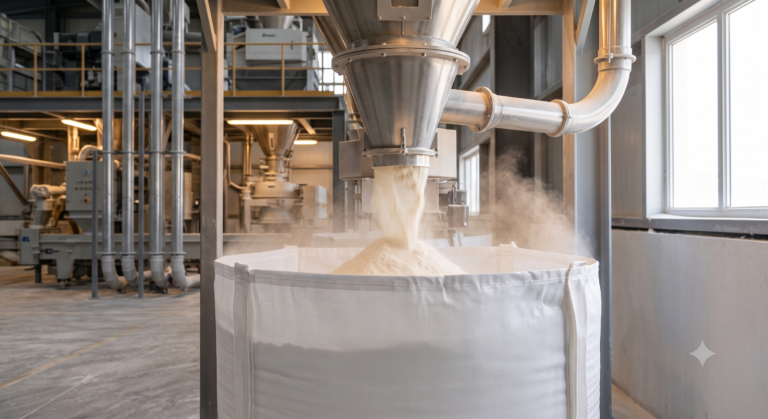
Packaging in 25/50 kg bags or bulk (jumbo bags, silos)
Dry warehouses with ventilation systems
Organized distribution to industries (plastics, coatings, paper, construction)
Efficient logistics ensure accurate delivery in both quantity and timing.
8 Environmental Control and Safety
Production processes can generate dust, so measures include:
Dust collection systems (bag filters, electrostatic precipitators)
Water treatment and recycling systems
Emission monitoring and wastewater control
Worker safety protocols (PPE, training, exposure guidelines)
Al-Siraj follows environmental standards to minimize operational impact.
9 Continuous Improvement and Product Development
Ongoing development includes:
Producing new grades (nano, surface-treated)
Reducing energy consumption
Increasing recycling and use of secondary materials
These efforts help Al-Siraj remain competitive and meet high-value market demands.
Conclusion:
Production Process Summary
Calcium carbonate production in an integrated factory like Al-Siraj follows multiple stages:
Raw material sourcing → Crushing → Grinding & classification (GCC) or Calcination/Slaking/Carbonation (PCC) → Surface treatment → Quality control → Packaging & storage → Shipping
Maintaining quality, environmental responsibility, and safety at every stage ensures a final product that meets diverse industrial requirements.